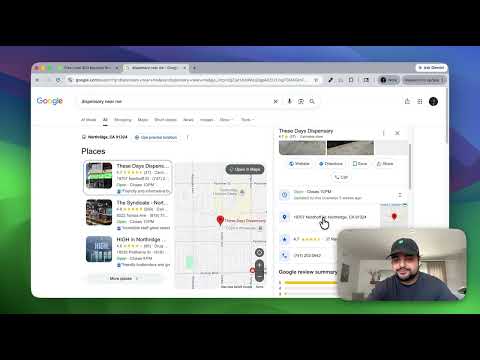
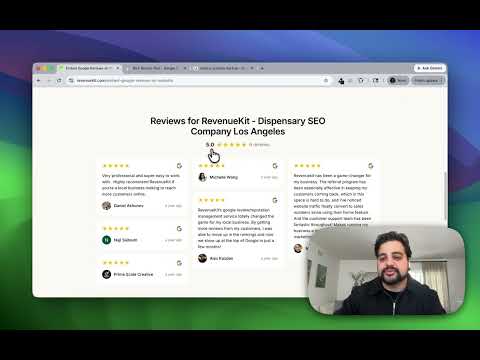
When potential customers search Google for a shop like yours, the top results aren’t random. Google ranks businesses by relevance, proximity, and prominence. While you can’t move your address or control what people search, you can influence how prominent your business appears (meaning how established and trusted you seem). The key factor here is reviews. The more reviews you have, and the more recent they are, the higher you’re likely to rank and the more trust you’ll build with potential customers.
Surprisingly, most retailers don’t work on reviews consistently. Setting up a tool like RevenueKit is a great first step. You’ll usually see a quick bump in reviews, but then things level off. Often below what your traffic could support. The tool isn’t the problem; it’s that nothing else is making sure the ask for reviews happens every time. Even getting just 30% of customers to leave a review can make a big difference, but most shops end up with far less.
Reviews often come in bursts, with a spike followed by silence. But Google rewards a steady flow of new reviews, not one-time surges. In fact, sudden spikes can trigger spam filters, leading to the removal of reviews that seem fake or incentivized. The best results come from asking consistently, especially in person.
What reviews actually do for local SEO
It’s important to explain how reviews help your ranking, since that advice is often repeated without much detail.
Prominence. Google's own help docs describe local ranking as a mix of relevance, distance, and prominence, and they name your reviews as one of the things that shape prominence. More reviews and higher ratings generally help how you rank, though they are one input among several rather than the whole formula.
Recency and velocity. A steady stream of new reviews shows your business is active and trusted. Even with great ratings, if your latest review is nearly a year old, people may wonder what’s changed or if you’re still worth visiting. Fresh reviews reassure customers that others are choosing your business right now.
Keywords inside reviews matter. When customers mention things like how easy their visit was, the helpfulness of your staff, or the deals they found, it makes your business show up more often in common searches. You can’t script these details, but asking for reviews regularly will bring them in naturally.
Choice. Fresh reviews don’t just look good, they drive action. When someone reads your reviews, gets directions, calls, or visits your website, it signals that your business is turning interest into intent.
Every week without a reliable ask is a week a competitor closes that gap in search.
Even with the best tool in place, you might not see immediate movement in rankings. Here’s why just 'turning on the tool' often isn’t enough.
Turning on a tool like RevenueKit is a real head start. It makes sure review requests go out while visits are still fresh. But that’s only the first step. Real, lasting results come from a smooth process and consistent human habits. If you stop getting reviews, it’s usually because one of those pieces is missing.
A few things tend to break it:
The ask isn’t tied to a real moment. If you send a generic “please review us” message after a purchase, it can feel like spam. It needs to connect to a specific experience the customer remembers.
The tool adds friction instead of removing it. Some review tools are clunky. They point to the wrong location, make you tap through too many screens, or don’t work well on mobile. Even motivated customers might give up before posting. That’s why the tool you choose matters. A tool built for reviews, like RevenueKit, makes it quick and easy: it opens the review box right away and sends happy customers straight to Google, so you don’t miss out on reviews you’ve earned.
It's nobody's job in particular. Review generation usually sits loosely between retail and marketing, so when both sides get slammed, it's one of the first things to drop. Spread across everyone, it ends up owned by no one.
A single review request can be easy to miss, as most people ignore one-off requests. Busy customers require multiple touches to respond, and repeated requests are far more effective than relying on a single message.
The tool alone is rarely what's holding things back. What's missing is the system of built habits and accountability that should surround its use.
Where the right tech earns its place
The real test of any tool is whether the ask runs on its own and runs accurately. This comes down to how well it plugs into the systems you already run. A direct line to your POS and eCommerce lets the request trigger from a real purchase, reach the customer while the visit is fresh, and land on the correct location's Google profile.
The ask shouldn't be one-and-done either. A single text is easy to miss, so the better setups fire again on the next qualifying purchase rather than writing off a customer who stayed quiet the first time. RevenueKit handles that re-ask, and with regulars, it pays off more than a one-off review ever would. Someone who reviewed you when they were new can tell you how the experience holds up now, so you're hearing about the day-to-day instead of just their first impression from months ago.
The path matters as much as the timing. Every extra step between the text and the review box costs you someone who was ready to write one, so the fewer steps in between, the better. The better path drops a happy customer straight on the Google review page with the box already open, and gives anyone who had a rougher visit the option to share private feedback. Keeping a public review option open to everyone keeps you in compliance with Google's gating rules. RevenueKit is built this way, so you get the short path and the compliance without needing to build that logic yourself.
Who actually runs it
Reviews usually go quiet in the handoff. Retail owns the moment a happy customer is standing at the counter, and marketing owns everything that happens after they walk out, so the review slips through the seam where those two meet. It runs best when each side holds a defined piece instead of leaving one department to carry the whole thing.
The floor owns the human ask. The highest-converting moment in the whole system is the in-person ask at the register, right when a customer has clearly had a good visit. A budtender primes it with a quick, genuine line that the shop pays attention to feedback and that a review really does help. Hearing that from a real person in the moment lands harder than virtually any other touchpoint method. The store manager keeps that ask alive, coaching it into the normal flow so it survives turnover, while marketing hands the floor the words to use and the physical assets to lean on, like a review card in the bag and a QR stand by the register.
Marketing owns the path. This is everything from the sale to the posted review. The automation runs on its own once it's set up, so there isn't much to do day to day beyond making sure reviews are replied to and steadily submitted.
Retail and marketing share the follow-through. Once reviews start landing, the work shifts to tending them, and that part never really ends. Who answers depends on how urgent the review is. Retail management should take the negative ones as fast as possible, since they usually know what actually happened that day. A quick, fair, public reply counts for more than a slow, polished one. Marketing takes the rest, including the replies that can double as a small marketing moment. When a regular raves about your selection, or highlights a behavior the shop wants to see more of, a reply thanking them and adding a useful detail gives the next person reading it a reason to come in. The only real rule is that the two departments stay in close contact, so nothing sits unanswered while each side assumes the other has it.
Measuring is the other half of the job. Someone keeps an eye on how many reviews are coming in, where the rating sits, and what people are saying, so a dip gets caught early instead of months down the line. It's also where repeating complaints jump out, and that can be worth more than the number itself. It points to a real problem on the floor you can fix, and you can speak to it directly when you reply to the reviewer.
What it looks like when it's working
None of this work is a campaign meant to run once and retire. Your review ask system should work more like a staple practice, on par with keeping your store hours accurate or your posted promotions current. Reviews just become part of how the business runs, and they compound the longer the system stays on.
You should feel the difference after a couple of months. Fresh reviews appear on their own rather than after a deliberate push, and the most recent one is rarely more than a few days old. The team asks without being reminded because it's part of the flow, and when the number dips, someone can point to the touchpoint that slipped rather than guess.
Run it long enough and the whole thing gets boring, and boring is the goal. Reviews keep landing on their own, and your ranking holds without anyone pushing, which frees the team to focus on the visit itself rather than chasing reviews. A steady stream of reviews is just one feedback loop, but it's one of the easiest and most important ones to have in place.
Steph Vrona is the founder of HighDef Studio, where she builds review and retention systems that turn one-time shoppers into regulars for local retailers and dispensaries. More at highdef.studio.