Most dispensary owners have been told SEO works, and plenty can show you a ranking report to prove it. Fewer can show you the sales. Dispensary SEO makes money when six handoffs between a Google search and a sale all hold, and the revenue usually leaks at a handoff nobody measures, not at the ranking.
So before you pay for more rankings, find out which handoff is broken. Here’s how each one works, where it fails, and what to track so you can see the revenue instead of assuming it.
Rankings Are the First Handoff, Not the Result
A ranking only gets you a shot at the customer. Between the search and the register, the customer has to find you, choose you, reach your menu, buy and come back. Think of that path as the search-to-store chain, and check it one handoff at a time.
| Handoff | What has to happen | Where it usually breaks |
|---|---|---|
| 1. Demand | A shopper searches “dispensary near me,” your city, a category or a brand | You only track a few head terms and miss the product searches |
| 2. Visibility | Your store shows in the map pack, organic results and AI answers | You rank at the front door and disappear a mile away |
| 3. Action | They call, tap directions or click to your website | The profile link drops them on a homepage with no menu |
| 4. Menu | Your menu loads, the age gate clears and the product is there | Thin category pages, out-of-stock dead ends or a slow mobile page |
| 5. Order or visit | They place a pickup order or walk in | Nothing connects the sale back to the search |
| 6. Repeat and review | They come back and leave a review | No one asks, so prominence stalls |
The chain multiplies. A strong ranking times a broken menu is still a weak month, which is why the fix is often further down the chain than the ranking report suggests.
Demand Is Bigger Than “Dispensary Near Me”
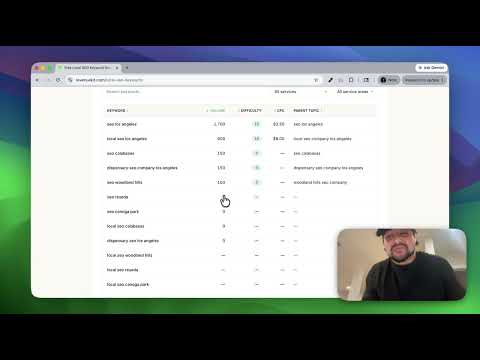
“Dispensary near me” and your city name are the searches every store fights over. They aren’t the only ones that bring buyers. Shoppers also search for categories like edibles or pre-rolls, for product types like live resin, and for brands they already trust. Each of those searches can end on your menu, but only if you have a page that matches it.
List the categories and brands that drive your sales, then check whether your site has a page that could rank for each one.
RevenueKit’s guide to local keyword research for dispensaries shows how to find the terms.
Map Visibility Comes Down to Relevance, Distance and Prominence
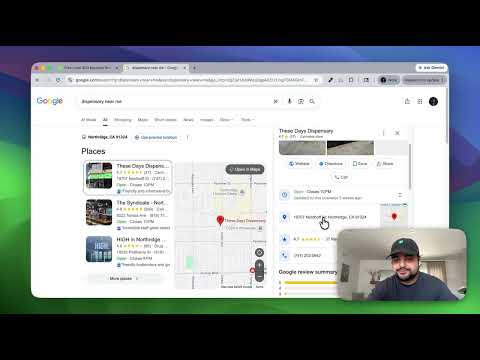
Google says its local results are based mainly on relevance, distance and prominence. You can’t move your building, so distance is fixed, but the other two are yours to work on.
Relevance is how well your Google Business Profile and website match the search. That means the right primary category, current hours and products, and pages on your site for the categories people actually shop, like flower, vapes and edibles. Prominence is how well known you are.
Google says it looks at things like how many sites link to you and how many reviews you have (especially your review velocity!). Don’t judge visibility from one rank check at your counter. Map results change as the searcher moves. A store can sit at number one in its own parking lot and fall out of the top three a few blocks away. We measure this with Share of Map, Heady’s metric for how much of the valuable search demand across your trade area you actually capture.
AI answers sit on the same foundation. Google’s guidance for AI Overviews and AI Mode says no special optimization is required, and that meeting the basics still doesn’t guarantee inclusion.
In practice, assistants recommend dispensaries whose facts line up across the profile, the website and the menu platforms. Conflicting hours or addresses give them a reason to name someone else.
The Profile Click Is Where Most Tracking Stops
The Performance view in your Google Business Profile shows calls, direction requests and website clicks. Those are the first numbers in the chain that look like customers, and for a lot of stores, measurement stops there.
The problem is what happens after the click. In Google Analytics, a visit from your profile usually shows up as ordinary Google organic traffic, mixed in with everyone who found a blog post. You can’t tell whether the profile is sending shoppers who buy.
The fix takes five minutes.
Add UTM parameters to the website link in your profile. Google’s own Analytics help says to always use utm_source, utm_medium and utm_campaign when you tag a URL.
A simple version looks like this:
?utm_source=google&utm_medium=organic&utm_campaign=gbp-downtown
Use a different campaign value for each store. While you’re editing the profile, point that link at the store’s menu or location page instead of the homepage, so the shopper is one tap from the product.
You can check what else your profile is missing with RevenueKit’s free Google Business Profile audit.
Your Menu Decides Whether Search Traffic Turns Into Orders
Your menu is where search traffic becomes revenue or quietly leaks out. Two things go wrong most often.
The first is setup. Most dispensaries have moved to menus built for search, like Dutchie Ecommerce Pro, Jane Boost or Jane Premium. Stores still on Dutchie Plus are planning their move before Dutchie ends support for it at the end of 2026.
The platform usually isn’t the problem anymore. How it’s configured is. Category pages with no copy, product pages that never get indexed, and menus that look the same at every location all waste the platform you’re paying for. Our Dutchie Ecommerce Pro vs Jane Premium comparison covers what each one gives you to work with.
The second is plain conversion. A slow mobile page, an age gate that resets on every visit, or a product that’s out of stock all cost you orders you already paid to attract.
Conversion gains add up faster than most owners expect.
Here’s a hypothetical.
Say your menu gets 2,000 visits a month from Google and 5% of them order, which is 100 orders. Raise menu conversion to 7% and the same traffic produces 140 orders, a 40% gain. Getting those 40 extra orders from rankings alone would take about 800 more visits every month.
Then make sure completed orders reach GA4 as purchase events, tagged with where the visit came from. Without that, the menu is the one handoff you can improve but can’t prove.
Walk-In Sales Need a Proxy, Not a Guess
Plenty of customers who find you on Google never place an online order. They tap directions, drive over and pay at the counter. No analytics tool will hand you that sale, so you need proxies you trust.
Direction requests are the most direct one. Track them by store, month over month, alongside new-customer counts from your POS. When direction requests climb and first-time customers climb with them, search is doing its job. A “how did you find us” field at loyalty signup adds a second read.
Treat these numbers as directional rather than transaction-exact. They show whether search is moving foot traffic, but they won’t tell you the dollar value of one ranking, and anyone who promises that is guessing.
Reviews and Repeat Visits Close the Loop
Reviews are where the chain feeds itself. Google’s local ranking guidance says more reviews and positive ratings can help your local ranking, so every happy customer who leaves one makes the next search easier to win.
Timing matters most. The best moment to ask is right after the purchase, while the visit is fresh.
Tools like RevenueKit trigger the review request from your POS when the sale closes, and we run it for a dispensary client for exactly that reason.
Ask every customer, not only the ones you expect to be happy. Google’s review policy says businesses may not selectively solicit positive reviews or offer incentives for them. Route complaints to a manager, fix what you can, and let the volume of honest reviews do the work.
Repeat visits matter for the same reason. You already paid to win a returning customer once, and a regular is the person most likely to leave that next review.
Report Revenue Signals, Not Rankings
A ranking report tells you how the first two handoffs are doing.
To see whether dispensary SEO is paying, review these signals every month for each store:
| Signal | Where to find it | What it tells you |
|---|---|---|
| Map visibility across your trade area | Share of Map or a local rank grid | Whether you show up where your customers search |
| Calls, direction requests, website clicks | Google Business Profile Performance | Whether visibility turns into intent |
| Menu sessions from search | GA4, filtered by your UTM tags and organic | Whether intent reaches the menu |
| Search-sourced orders and revenue | GA4 purchase events | Whether the menu converts |
| New customers vs direction requests | POS reports | Whether search drives walk-ins |
| New reviews and average rating | Your profile or review platform | Whether prominence keeps growing |
If a signal is flat while the one before it rises, you’ve found the leak. That’s where the next dollar goes.
Frequently Asked Questions
Can You Track Walk-In Sales From Google?
Not to the transaction. A customer who taps directions and pays at the counter leaves no digital receipt tied to the search. You can get close with proxies: direction requests by store, new-customer counts from your POS and a “how did you find us” field at loyalty signup. When those move together over a few months, you have a reliable read on whether search is driving foot traffic.
How Long Does Dispensary SEO Take to Show Up in Revenue?
Dispensary SEO shows up in revenue on different timelines, depending on which handoff you fix. Changes further down the chain, like tagging your profile link, pointing it at the menu or speeding up the menu, convert traffic you already have, so they can show up within weeks. Ranking gains take longer and vary with how competitive your market is. That’s one more reason to fix the leaks before buying more traffic.
Do Dispensaries Still Need SEO If They’re on Weedmaps and Leafly?
Yes. Marketplaces are worth being on, but the most visible spots are paid: Weedmaps sells promoted placements, and Leafly labels homepage retailers as sponsored. On a marketplace, you also compete side by side with nearby stores on the same page. Your Google Business Profile and your own website are assets you control, and the customers they bring in are yours.
Start With the Handoff You Can’t See
Pull last month’s website clicks from your Google Business Profile and put them next to the search-sourced orders in Google Analytics (GA4). If you can’t get the second number, tag your profile link this week and check again in 30 days. If you can get it and the gap is wide, fix the menu before you chase another ranking.
If you’d rather have someone map the whole chain for your stores, Heady’s cannabis SEO team does this work for single-store dispensaries and multi-location operators.
About the author: Tim Naughton is the Founder of Heady, a cannabis marketing agency that runs SEO, AIO, websites and CRM for dispensaries and cannabis brands.