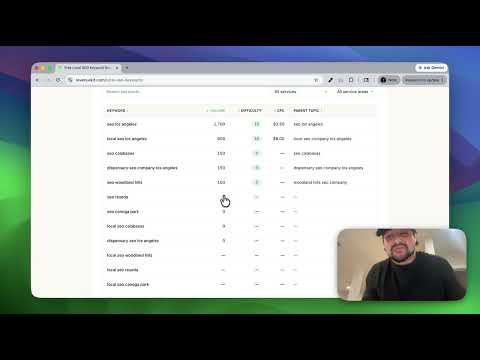
So, I've been in the cannabis industry for over 11 years at this point. And if I was to open a dispensary tomorrow, I would focus 90% of my energy on this one marketing strategy. I wouldn't touch paid ads. I wouldn't do social media. I would not put up expensive billboards. I would focus primarily on local SEO. And I know that the second the word SEO gets thrown around, it might seem overly complicated or overly technical for most people. You might think it's, you know, super expensive or might take a long time to actually implement. But local SEO is literally the opposite of that.
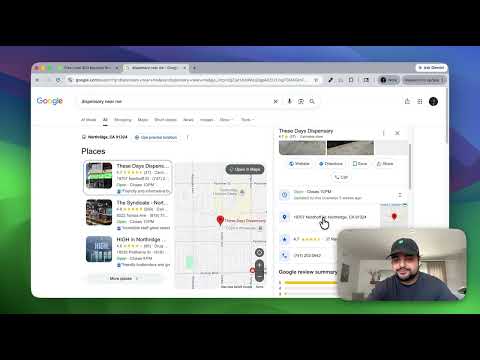
It's completely free to do and it's more straightforward than you might think if you know the secrets and the strategies to implement. So in this video, I have 10 slides for you guys. I'm going to do an intro to local SEO and I'm basically spilling the beans. I'm going to tell you exactly step by step how you can implement local SEO yourself for your own dispensary. So bear with me here. Let's get through these slides and let's dive right into it. So let's touch on first and foremost what is local SEO. So local SEO helps your business appear when customers search for businesses in their area right locally. So, if they search a local intent search term such as dispensary near me or dispensary Los Angeles, local SEO is what pops up at the top, right? So, anytime you see a map and Google is showing you local businesses, that's local SEO versus if you search something like sunglasses, right? Sunglasses aren't necessarily uh a local search term, right? You can ship sunglasses nationwide or worldwide. And now all of a sudden you have competitors such as sunglass hut or Ray-B bands uh at the top of the list. When it's a local intense search term, you just deal with the local businesses in your area.
Now, this isn't just for cannabis. This applies to every industry. So, if I search barberh shop near me, I get local SEO. I see the Google maps with the local businesses. If I search this or if I change the search term to sunglasses shop near me, I get local SEO, right? You get Google Maps with local sunglass businesses. And it doesn't just apply to Google either, right? You can do local SEO in other marketplaces such as Yelp or Forsquare.
It's not just Google, but in this video, we're going to focus on Google primarily. And just to dive a bit deeper, it's important to understand the differences between local SEO and regular SEO. So for local SEO, you are popping up in an entirely different section, right? So that's this Google Places section that we talked about. Anytime it's a map view, again, this is local SEO that you're popping up in. Now, traditional SEO are these links right here. So of course, Weed Maps is going to pop up at the top. Their traditional SEO is great, but they don't have a physical location. So, they're not going to pop up in Google Places. Of course, Yelp is going to pop up at the top, right? Their traditional SEO is great, but of course, they don't have a physical location, so they're not going to pop up in Google Places. And the strategies to popping up in these different sections are different as well. So, Google, it's a little misleading because it seems like all one thing, right? You search stuff and stuff pops up. But actually the different sections of Google are in their own ecosystems and they work completely differently. So to rank your business on Google Places, it's a completely different strategy and completely different tactics to show up here versus the strategies and tactics to show up in regular SEO, traditional SEO. And then of course you have paid ads on Google and that's its own ecosystem as well, right? That's paytoplay. You pay money, they make you pop up at the top. So, different sections and different strategies.
The other thing is you have less competition, which means you're going to get quicker results, right? So, of course, it's easier to compete locally, not globally. So, for local SEO, you're just competing with the businesses in your area versus here when I was searching for sunglasses, you know, businesses that can ship nationwide or worldwide. Now you're competing with Sunglass Hut and Rayban. Right now to actually rank here, it is going to take you hundreds of thousands if not millions of dollars and years and years of doing business to be able to out compete these global giants.
But for local SEO, you're just competing with the guy next door, right? Whatever that shop is nearby. So, it's a lot easier, of course, and you're going to get quicker results um in return. Then the last thing is again you have different goals here. So we're not trying to rank globally or uh nationwide, right? At the end of the day, it doesn't matter if somebody in New York uh searches cannabis and finds your dispensary in Los Angeles, right?
You can't ship to them. They can't shop from your business. So trying to rank, you know, traditionally for a keyword like cannabis uh globally or or nationwide is pretty much pointless, right? So local SEO again is going to focus on local customers in your area. People that can search on Google and actually walk into your shop, you know, or place an order online um and pick it up or get it delivered to them. So that's local SEO versus regular SEO.
Now, the benefits to local SEO and why it matters is uh the the big thing here, right? So for one, it's completely free, right? You're not paying to play. Uh there are no ads required. It's completely free to set up. Unlike some marketplaces like Weed Maps or Leafly where you have to pay to get a listing and get it ranked high, uh you don't have to do that on Google, right? It's completely free to set up an account and you don't have to pay them to get that number one or number two or number three spot.
The other thing is is that it's cannabis friendly, right? So unlike certain things like paid ads or even social media, right? Uh people get their accounts banned all the time. Uh which is why I mentioned in the beginning of the video I wouldn't necessarily focus on that. Local SEO is cannabis friendly. So when I'm searching dispensary Los Angeles, they there's literally a category for cannabis shop in Google, right? It's completely allowed. It's completely above board. You're not going to get your accounts, you know, turned off or shut down. So that's huge specifically for the cannabis industry.
The lastly, you have long-term results, right? So, it's sustainable results that's going to compound over time. You can rank sustainably and you can maintain that over time versus something like paid ads where the second you stop paying, you will stop ranking, right? Or the second you stop paying weed maps, your listing is going to fall off and people aren't going to find it anymore. So, this is sustainable because you're not paying to play and uh you know, again, it compounds over time. Okay, so I think I made my case, you know, what is local SEO, how it differs from traditional SEO, and why it matters.
Now, let's dive into how you can actually do this for yourself, right? Here are the tactics and strategies that you can implement to do local SEO and get your dispensary ranking at the top of Google. So, this is the ranking formula. This is very important here. These are the secrets that I'm spilling. Most people will not give you this information, especially for free, but this is literally what you can do step by step to rank your dispensary on Google using local SEO. I'm going to walk you through each of the steps of the formula, and then I'm going to actually show you a live example of a dispensary that is doing a good job at using these steps so you can see for yourself like out in the real world, a real business leveraging it to rank high on Google.
So step number one is your Google business profile signals. Obviously your Google business profile is the foundation and this is the Google business profile, right? So when somebody clicks on Google Places, they see your Google business profile and Google takes a couple things into account when they're looking at your profile. The first thing is going to be proximity. So obviously the distance matters, right? And this is something that you can't change, of course, but it's something to keep in mind. This is the whole point of local SEO. If somebody is searching dispensary near me in New York, your Los Angeles dispensary is not going to show up. It's not going to rank. That's the obvious, right? But maybe you're in a small town and you're trying to rank for like, you know, the big city 20 miles away or 30 miles away.
It's also going to be an uphill battle for you. Uh even just 20 or 30 miles away, right? Because there are dispensaries in that city that are just going to be much much closer and they're going to have closer proximity to you. So, it's not something you could change all of the time, but it's something to definitely keep in mind as you're working on Google SEO because of the keywords that you want to target, right? So, the next thing that Google's going to look at is the keywords and the categories that you're targeting. So if you are trying to rank for dispensary Los Angeles, which let's say is a big city, right, but you are in a smaller city 10 or 20 miles away from it or a smaller town 20 or 10 or 20 miles away from it, you might not want to target the dispensary Los Angeles search term, right? It's going to be an uphill battle for you. You might want to target the, you know, dispensary insert city name, whatever that whatever town that you're in or maybe the next largest town that's closer to you than the big city. And where this comes in handy is in the title, right, of your uh listing, right?
So, we have LA Wonderland Marijuana Dispensary Los Angeles. So, marijuana dispensary Los Angeles is actually the keyword, the primary keyword that LA Wonderland dispensary is trying to target here. So you can target it in your titles. You can also target it in your description. So here they didn't do a great job of, you know, reiterating that they're a marijuana dispensary in Los Angeles. They use the term marijuana dispensary, but they could have done a little bit better with uh the local search term that they're trying to rank for. And it's not just for, you know, that search term. Maybe if you want to emphasize the fact that you do delivery.
So maybe it's like cannabis delivery Los Angeles or you want to emphasize the fact that you do curbside or intore pickup um or you have a drive-thru. These are all keywords that you can target in your title and in the description of the Google business profile. Lastly, your profile activity, right? So they want to make sure you're using Google business and they incentivize and reward those who do. So you want to post on Google Business. You could create posts directly on Google business. When you get questions from people, you want to answer them, right? So, they have 259 questions. That's a great signal for Google. It shows that people are actually interested in the business.
There's activity. They have customers. And if they're responding to it, then even better. And then, of course, even the reviews that you get, right? So, you want to respond to reviews. Let's see if they're doing it. They could do a better job of responding to reviews, but you could even respond to reviews and that's a form of activity as well on Google. So, you want to have an active profile. You want to make sure that the keywords that you are targeting are in your profile's title and description. And you want to take proximity into account when you're doing all of this. That is strategy number one of the ranking formula.
That's your Google business profile signals. Next, we're going to look at behavioral signals. Now, this also pertains to your Google business profile, but it's not something that you control as the business. It is something that the customers and the consumers are doing. So, the customer's actions drive your rankings as well. As a customer, you can click to go to the business's website. You can click to map directions. You can click to call the business. Every time a customer clicks on these links, Google takes that into account. Of course, the business that is getting, you know, customers to click on mapping directions 100 times a day is going to rank higher in Google's eyes than the business that gets 10 clicks a day or five clicks a day or less, right?
So, the consumer actions when they click on any of these links, it matters. This is signals that Google looks at. Um and of course they uh reward the listings that generate this engagement. So that is uh number two in the ranking formula that's behavioral signals from your customer base from the actual consumers. So admittingly the first two things in the ranking formula are pretty common sense, right? Of course Google wants to see you having an active profile. They want to see responding to questions, responding to reviews, uh posting on Google, posting images, and of course, they want to see that consumers are also interacting with your profile, that they're clicking to call, they're clicking to go to your website, they're clicking to map directions, so on and so forth. And some of the stuff you can control and some of that you can't. Now, the next three things on the ranking formula is stuff that you can directly do today. You have direct control over and you don't need to wait for consumers to map directions or ask questions for you to answer to in the Google business profile. You can do this today and this will give you an immediate boost. It'll help you rank a lot higher than if you're not doing these things. So the third thing that I want to talk about is onpage SEO. So your website actually strengthens your local ranking. Google will not just look at your Google profile, right? We talked about keywords in your Google profile.
They will actually go to your uh website, right? So, they'll click on this link and they'll crawl your website. They'll go through the website as well. And you want to make sure that your website is set up for success as well. So, you want to make sure your website reiterates those same keywords, right? And you want what's called nap consistency. So, nap consistency is name, address, and phone number. You want this to match exactly across your website and other platforms as well. So on your website in your footer, right, you want to make sure you have your name of your business, the address, the phone number. You want to make sure that exactly matches your Google listing. If it's a mismatch, Google has less confidence that you actually exist at the address that you're stating you exist and that people can actually call you at the phone number that you listed, right?
So in your website footer, in your contact page, you want to reiterate your locations, reiterate your name, your address, your phone number, and of course reiterate those keywords. So if they're trying to rank for marijuana dispensary Los Angeles, they better have that on their website as well, you know, on multiple pages, their frequently asked questions, so on and so forth. And also even small variations, right? Putting street period versus spelling out street fully, it can hurt your ranking. So just make sure it's as exact as possible and match it across all platforms. So your Google business profile should match your website and it should match your social media profiles as well. So that's onpage SEO. We've optimized your uh Google business profile itself. Now we have to go and we have to optimize your website. That's where onpage SEO comes in. Now that we've done that, we can take it a step further with off-page SEO. So this is gold as well. This is something that businesses often overlook. You want to list your business on directories across the entire internet, right? So you know you exist on Google, they know that you have a website, you know, you know they know that. But if you also exist on Yelp, on Yellow Pages, on Facebook, right, on your local Chamber of Commerce or industry specific directories, Weed Maps, Leafly, all of this just reinforces to Google the fact that your business again actually exists. You're actually doing business. And of course, again, if you have NAP consistency where your name, your address, your phone number are all matching across all of these citations, it's that much more important. You want to give Google utmost confidence that you have an actual business as it loc, right? If you have a different address on Yelp than you do on your Google business profile, than you do on your website, these are all red flags for Google. So, I can't stress that enough.
Okay, so that's onpage SEO and that's off-page SEO. Again, these are things that you can do today. You don't need to wait for your Google business profile to be popular and to have behavioral signals and, you know, to get these Google business profile signals. Really, you can start with onpage SEO and off-page SEO. The last thing that you can do that is very important in this ranking formula is review signals. So, Google looks at the quantity of your reviews. They're going to look at the quality of your reviews as well as the velocity of your reviews, right? So, of course, they want your business to have a lot of reviews.
They want them to be high quality, so high rating, you know, maybe even with images or whatever the case might be. And they want you to be getting them consistently and often. So, that's where velocity comes in. Now, you could have a business that has a thousand fivestar reviews, but they don't have velocity. They haven't gotten a new one in 60 days, right? That is a red flag to Google as well. So, all of these things come into uh, you know, matter. You should take it into account with reviews. It's a big part of Google. Of course, the business that has 5,000 five-star reviews is going to consistently rank higher than a business that has 23 and a half star reviews.
Really quick, I was editing this video and I realized that I completely forgot to mention the software that you can use to automatically generate Google reviews for your dispensary. It's a software that I created. It's called Revenue Kit. And the way that it works is it integrates with your cannabis POSOS and it will automatically text every single customer after they've placed an order and it'll ask them and it will encourage them to leave a positive review on your Google Business profile as well as Yelp and other marketplaces. So, if you're looking for something that you could just turn on and forget about and it will automatically keep that constant flow of positive reviews coming in, then I highly recommend giving Revenue Kit a chance. If you go to revenuekit.com, you could sign up to get a free demo and we'll set you up with a 10-day free trial that'll speak for itself. And when you're on the website, you can also check out some of our case studies like this one where we helped Hyperwolf collect over a thousand Google reviews in less than 90 days. And this one where we helped Stillow Supply double their Google reviews in less than 90 days as well. That's it for now. Let's get back to the video. The last thing I want to do in this video is show you a reall life example of a business that I found that's using this formula to the tea.
Right? So, they're doing it they're doing it well and they're ranking high on Google business. So, we have Green Earth Co. Weed dispensary. So, they're trying to rank for weed dispensary. That is their search term here. They have a ton of photos. Their profile is active. They have questions and uh they're answering those questions. They have reviews coming in. Quality reviews with images and high ratings, right? And they're responding to the reviews as well. They have over 1,000 reviews and an average rating of 4.8 stars. So, they're in a good position already in their Google business profile. They're doing great. Now, what they have to do is match everything to their website, right? Again, Google's going to click on this website link. They're going to come here, and if you notice a couple things here, they have weed dispensary again in the title. They're reiterating to Google that this is the most important thing that they want to rank for. Their nap consistency, their name, their address, their phone number is listed first and foremost. Uh you know their hours listed first and foremost for Google to digest and see hey this does match our Google business profile listing.
If you keep scrolling down they have an embed of their Google business profile again signaling to Google that the listing matches the website and they also have other keywords that they're ranking for. So they're trying to rank for dispensary in Los Angeles. So they're using this keyword throughout their website dispensary in Los Angeles. If we keep going, they're trying to rank for dispensary Santa Clarita. So, they're also implementing dispensary near Santa Clarita, right? They're implementing the keywords that they want to rank for on their website. So, they're doing a great job of that. And then in the footer of their website, again, their nap consistency. So, their name, their address, their phone number, it looks like they have more than one location. So, they're listing that and they're reiterating that to Google. Uh so again it matches their Google business profile. So they're doing that really well. So we their Google business profile is great. It's set up perfectly.
Their website is great. They have their nap consistency, their keywords, everything's matching their Google business profile. Uh what's next is local citations. So if you actually search and this is a way that you can check local citations is just search the name of their listing. Right? Right. So, I just took Green Earth Co. Weed dispensary and you put it in quotes in Google and you searched that. And what you'll find is they have a ton of local citations. So, they are uh listed on Yelp, they're listed on Map Quest, they're listed on Yahoo, they're listed on uh dispensaries.bz, on weedex.io, io on ways.com and and it just goes nextto citysquares um cannabis shopop.com superpages.com they have a ton and ton of listings that shows Google we are an actual business this is our name they have their name consistency they have their address consistency their phone number consistency and it all just give gives Google a ton of confidence uh that they are worth ranking above others Okay. And then of course the last thing they, you know, just to touch on it again, they have a ton of reviews, which means, and they're getting them often, which means they're utilizing software to get that done. They're reaching out to every single customer after they place an order. They're asking them to leave a review, and they're getting tons of high-quality reviews, and they're getting them often. Okay, so that's a real life example of somebody leveraging those strategies. I hope you enjoyed this video. I'm out of breath making it.
Um, it was really fun putting this together. If you have any questions, um, or anything that I could help with, any feedback, please drop a comment below. And until next time, I'll see you guys later. Peace.